About the work
- Author
- William Shakespeare
- Original title
- The Tragedy of Macbeth
- Publication
- Written around 1606; printed in 1623, in the First Folio
- Genre
- Tragedy in Five Acts
- Setting
- Scotland and, in one scene, England
- Era
- Eleventh-Century Scotland
- Narrator
- There is no narrator: it is a play
- Protagonists
- Macbeth and Lady Macbeth
About the author
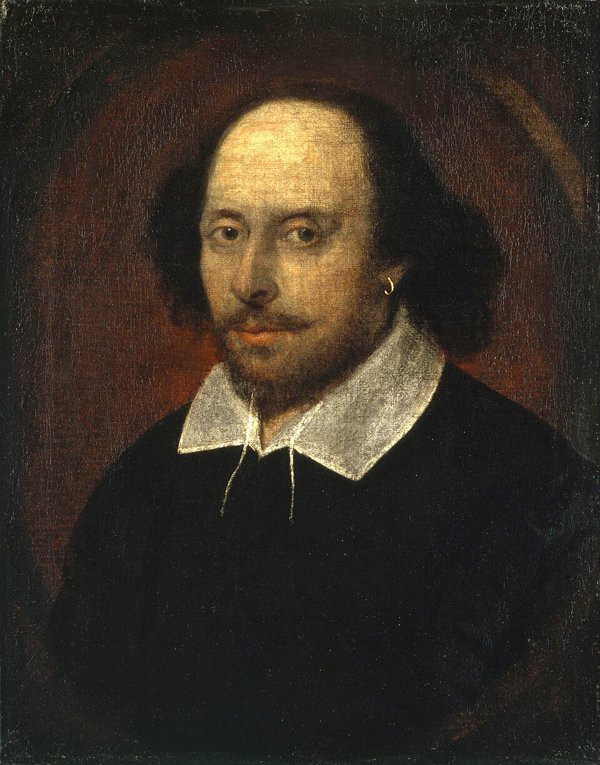
The provincial actor who, in London, wrote the tragedies by which the West still measures ambition, jealousy, revenge, and love. Read the profile of William Shakespeare
Central Theme
Macbeth, a Scottish captain, hears from three witches that he will be king, and the play follows what he does with the promise: he kills King Duncan to hasten what he was told, and each crime calls for another, until fear, guilt, and the emptiness of conquest leave him without sleep, without allies, and without meaning for what he gained. The apparitions say true things, and it is Macbeth's reading of them that makes them deceptive.
- What happens when someone tries to force destiny instead of waiting for it to fulfill itself?
Argument That Supports the Idea
- On seeing Duncan name his heir, Macbeth begins to see him as an obstacle; the decision to kill the king comes only in scene 7 of Act I, after he has drawn back.
King Duncan:
We will establish our estate upon / Our eldest, Malcolm, whom we name hereafter / The Prince of Cumberland
Counterargument That Undermines the Idea
- If Macbeth was truly destined to inherit the throne, did he need to kill the King?
Consequences
Already in scene 2 of Act III it is clear that Macbeth's situation has become desperate and without return.
Macbeth:
Things bad begun make strong themselves by ill.
Macbeth orders the murder of Macduff's entire family, and Macduff, in the end, kills Macbeth. The last prophecy comes true through a loophole Macbeth did not foresee: no man born of woman could harm him, and Macduff, as he himself says in scene 7 of Act V, was torn from his mother's womb before his time. The promise that sounded to Macbeth like a guarantee does not protect him.
The Thread That Runs Through the Work
The threads that run through the five acts: the problem of free will, guilt, imagination, masculinity and power, time and destiny, and the emptiness of conquest.
The Problem of Free Will
Do the witches foresee or determine? This is one of the great debates in Shakespearean criticism. Many critics argue that the witches merely reveal possibilities. The crime springs from Macbeth's decision. Part of the criticism sees the tragedy precisely in the fact that Macbeth is the author of his own ruin.
Do the witches foresee, or do they determine? After giving Macbeth the news, two readings are possible: either he was already destined to inherit the throne and killing the king would not change the outcome, or the witches manipulate him into committing the crime himself. Whether Macbeth had free will remains open.
Guilt
Perhaps no theme is more important after the murder of Duncan. Before the crime, Macbeth sees the imaginary dagger, in scene 1 of Act II. Later, he sees the ghost of Banquo, in scene 4 of Act III. And Lady Macbeth sees blood that is not there, in scene 1 of Act V. Guilt becomes a psychological force more powerful than any army.
This relation of guilt recalls the book Crime and Punishment
Imagination
Criticism often sees in Macbeth one of Shakespeare's most imaginative characters. He suffers not only for the crimes he commits but for the mental images he creates. His imagination anticipates horrors, produces visions, and magnifies his fears. In a sense, Macbeth is destroyed as much by imagination as by the sword.
The crime is born first as an image: in scene 3 of Act I, right after the title of Cawdor, Macbeth is already imagining a murder that is still fantastical.
Masculinity and Power
Many modern critics analyze the relationship between Macbeth and Lady Macbeth. She questions his courage, in scene 7 of Act I. He tries to prove his manhood through violence. The play investigates how certain distorted notions of honor and virility can lead to destruction.
Time and Destiny
Macbeth lives trying to accelerate the future. He will not wait: in scene 4 of Act I, on seeing Malcolm named heir, he begins to see him as an obstacle in his path. For this reason, several critics see the play as a reflection on the human attempt to control what should follow its natural course.
The Emptiness of Conquest
Macbeth attains exactly what he desired:
- he becomes king;
- he eliminates rivals;
- he wields absolute power.
But why would he want to become king? Macbeth discovers that power does not produce happiness.
Near the end, in scene 5 of Act V, he describes life as a walking shadow, a poor actor who struts and frets for an hour upon the stage and is then heard no more, a tale told by an idiot, full of noise and fury and empty of meaning.
Macbeth:
Tomorrow, and tomorrow, and tomorrow, / Creeps in this petty pace from day to day, / To the last syllable of recorded time; [...] Life's but a walking shadow, a poor player / That struts and frets his hour upon the stage / And then is heard no more. It is a tale / Told by an idiot, full of sound and fury, / Signifying nothing.
This passage is often seen as the moment when Macbeth realizes that he has won the world and lost himself.