About the work
- Author
- Thomas Mann
- Original title
- Der Zauberberg
- Publication
- 1924
- Genre
- Novel of formation, novel of ideas
- Setting
- The Berghof Sanatorium, in Davos, in the Swiss Alps
- Era
- The seven years leading up to the First World War
- Narrator
- Third person, a narrator who comments and addresses the reader
- Protagonist
- Hans Castorp
About the author
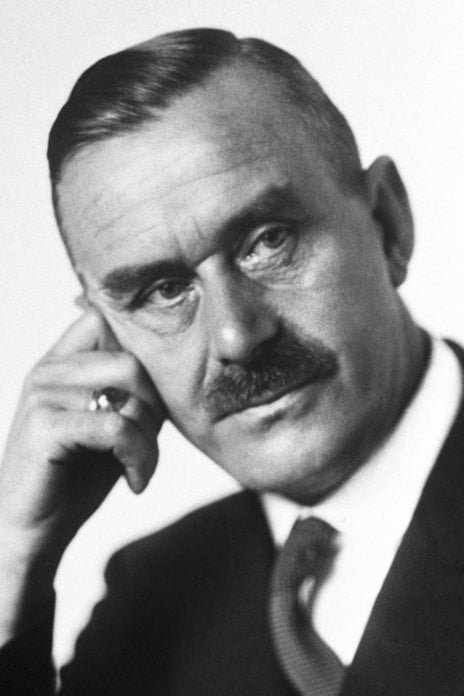
The German novelist who turned a sanatorium in the Alps into a portrait of a Europe on the eve of war. Read the profile of Thomas Mann
The Narrator Says What He Will Do, and Does It
The book opens with a short prologue in which the narrator declares the method, and the method is the subject.
The narrator also announces, already in the Purpose, the method by which he will tell the story.We shall narrate it in detail, with exactness and thoroughness
And he closes the same prologue with a joke that the reader only understands at the end:
Closing the Purpose, the narrator plays with the length of the narrative itself and anticipates, while denying it, the real measure of Hans Castorp's stay.Surely it will not come to seven years, heaven forbid!
Whoever reads the book's exhaustiveness as a flaw is complaining about exactly what was announced before the first scene. The novel's time is not long through carelessness: duration is the instrument, and a book about what duration does to a person cannot be short without contradicting itself.
Time, Which Is the Subject and Also the Form
The question runs through all seven chapters and changes register in each one. In Chapter III it is a conversation between two bored cousins; in Chapter IV it becomes a digression by the narrator; in Chapter VII it returns as a confession of impossibility.
The narrator's digression, in Chapter IV:
Habit represents the drowsiness, or at least the weakening, of the sense of time, and the fact that the years of childhood are lived more slowly, while later life unfolds and flees ever faster; this fact, too, rests on habit, Excursus on the Sense of Time
The chapter opens by denying the possibility and at the same time practicing it:
Can one narrate time itself, time as such, in and of itself? No, indeed one cannot, such a thing would be an insane presumption!
The thesis about habit is the most useful part of the book outside it, and it needs no sanatorium at all: time shrinks where nothing changes, and the routine that protects is the same one that erases. That is why the mountain makes sick whoever stays, even someone who climbed up healthy.
Why He Stays, and the Answer Is in Chapter II
The novel answers before it asks. The narrator's diagnosis of the young man, made in the childhood flashback, explains the seven years better than the spot on the lung.
When this answer is missing, the effect is not confined to the spirit:
To undertake a work that exceeds the measure of pure and simple necessity, when one's time knows no satisfactory answer to the question "For what?", one needs isolation and moral readiness, something rare and of a heroic nature, or else a very robust vitality, and Hans Castorp, the narrator says, possessed neither one nor the other.
Hans Castorp is not seduced by Settembrini or by Naphta because he is foolish; he is permeable because his era gave him no answer at all, and a man without an answer accepts any system that offers one. The book is about Europe before 1914 in exactly this sense, and not because it mentions the war at the end.
The Duel of Doctrines, and What the Novel Does With It
Settembrini is the humanist, reason, progress, form. Naphta is authority, terror, community, the dissolution of form. They argue for years, with the young man in between, and the novel refuses to grant either of them the win: one kills himself, and the other is left without an argument before a man who has no idea at all.
When Clavdia introduces them, the narrator names the effect the Dutchman has: whoever saw himsuddenly knew what a personality was, and even more: became convinced that a personality could not be other than he was.
Peeperkorn is the strangest and most decisive piece of the book: the answer to the duel is not a third doctrine, it is a presence. Whoever tries to sum up the novel through the theses of Settembrini and Naphta loses precisely this, and is left with a debate instead of a novel.
The way out that the protagonist himself formulates comes from neither of the two, and it comes when he is about to die frozen:
I will not grant death any power over my thoughts! For that is what goodness and philanthropy consist of, and nothing else. [...] Love confronts death; only love, and not reason, is stronger than it.
And he forgets. The novel gives the character the sentence that would resolve everything and does not let him keep it, which is the harshest decision in the book and the reason it does not end in a lesson.
The End
The narrator's final farewell promises nothing and only asks:
Will love, too, still arise from this world festival of death, and from the pernicious fever that inflames the sky of the rainy night?
What Criticism Made of It
Otto Maria Carpeaux, in A Concise History of German Literature, offers two theses about this novel that are worth more than any plot summary. The first shifts the book's subject from a Swiss sanatorium to the continent:
Der Zauberberg (The Magic Mountain) sums up all the earlier works, but with a new orientation. It is the novel of a decline, like Buddenbrooks, but not of a German family; rather, of all of Europe.
The second says that the digression is not excess, it is the genre, and it names that genre:
The second concerns what the book inaugurates as a form, and it is from this that comes the genre name that criticism has since adopted.The Magic Mountain is one of the first examples of the essai-roman (essay novel), which would become one of the dominant genres of modern literature.
Together they answer the most common objection to the book. Whoever complains that it stops the plot to discuss time, illness, politics, and form is describing what Carpeaux calls the essay novel, and asking that the novel be something else. It is worth reading with this in hand, because it changes expectations before the first page.
In How to Read a Book, Mortimer Adler uses this novel as the example of a rule he gives for all fiction, and it is the rule the book most demands of the reader:
even if a character should express himself in this way, for example as Settembrini speaks of progress in The Magic Mountain by Thomas Mann, it is not possible to be certain that the author's opinion is being represented there