About the work
- Author
- William Shakespeare
- Original title
- The Tragedy of Julius Caesar
- Publication
- Staged in 1599; printed in 1623, in the First Folio
- Genre
- Roman Tragedy in Five Acts
- Setting
- Rome; in Acts IV and V, the camps at Sardis and Philippi
- Era
- Rome, from 44 to 42 B.C.
- Narrator
- None: a play, in verse and prose
- Protagonist
- Brutus, More Than Caesar
About the author
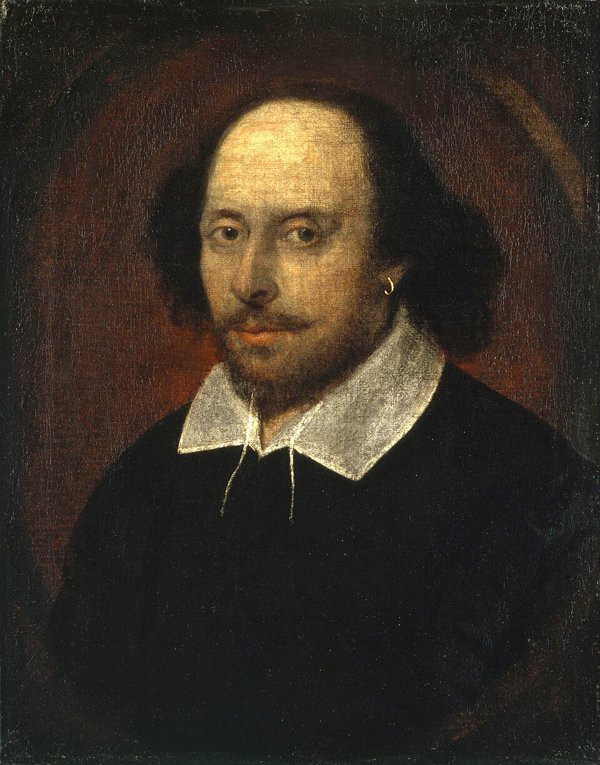
The provincial actor who, in London, wrote the tragedies by which the West still measures ambition, jealousy, revenge, and love. Read the profile of William Shakespeare
Central Theme
A group of honorable Romans kills the man who may become king before he is one, and the play shows what the crime does: the myth of Caesar grows in Antony's mouth, and the conspirators die in the civil war they wanted to prevent. Brutus acts for a future he himself imagines, the serpent's egg, and the question that remains is whether it is legitimate to kill to prevent an evil that has not yet happened.
The evil that Brutus wants to prevent never comes to exist in the play; what exists is the price of having prevented it.
Tyrannicide and the Preventive Crime
The heart of the play. Brutus kills not for what Caesar has done, but for what he could do, the serpent's egg, and the question the play leaves is whether it is legitimate to kill to prevent an evil that has not yet come to pass. The preventive act creates the future it feared.
Brutus believes that a crowned Caesar would become venomous. To strike first would be to crush the serpent before it kills.
Brutus (on Caesar): "And therefore think him as a serpent's egg / Which, hatched, would, as his kind, grow mischievous; / And kill him in the shell" The justification for the preventive crime.
Preventive tyrannicide does not prevent tyranny: it produces civil war, the proscriptions, and the rise of Octavius, that is, exactly the empire it wanted to avoid. The remedy generates the disease on a larger scale.
Fate, Fortune, and Free Will
The play is surrounded by omens, but its strongest lines affirm freedom: the fault is not in the stars but in ourselves, and Brutus says they will know the designs of the Fates. Against this stands Fortune, whom Antony says is cheerful and ready to give whatever is asked of her. The tension is never resolved.
Cassius: "Men at some time are masters of their fates: / The fault, dear Brutus, is not in our stars, / But in ourselves, that we are underlings"
Rhetoric and the Myth of Caesar
Alive, Caesar is a man; dead, he becomes a myth through Antony's eloquence. Words are the decisive weapon: Antony's funeral oration, pretending to be neutral and repeating with irony that Brutus is an honorable man, turns the crowd that Brutus's logic had convinced. Brutus's reason convinces; Antony's pathos sweeps away.
Freedom Through Death (Stoic Suicide)
Casca says that every servant holds in his own hand the power to end his captivity. This is the thread that binds Cassius and Brutus: voluntary death as the last freedom that tyranny cannot reach. In Act V, Cassius, mistakenly judging that all is lost, orders the servant Pindarus, who is freed by this gesture, to kill him with the same sword that wounded Caesar: the conspirator dies by the instrument of his own crime, and the Stoic suicide announced in Act I is fulfilled. It closes with Strato: only Brutus conquered Brutus.
The Idealist and the Consequence
It echoes Macbeth in reverse: there ambition corrupts; here the ideal blinds. In both, forcing the course of history collapses on the one who commits the act. Brutus spares Antony and lets him speak: two mistakes of an honorable man. Moral purity disarmed of political prudence is catastrophic: the republic that Brutus wanted to save dies with him, and the Empire is born.
Between Dante and Shakespeare: Traitor or Hero?
The same figure receives two opposite verdicts, separated by almost three centuries.
- In Inferno (Canto XXXIV, the ninth circle, Giudecca, of traitors to their benefactors), Lucifer has three faces, and each mouth crushes a traitor. In the central mouth, Judas Iscariot, head first; in the two side mouths, Brutus and Cassius, hanging by their legs. For Dante, they are the three arch-traitors of history: Judas betrayed Christ (divine authority); Brutus and Cassius betrayed Caesar (imperial authority, which Dante saw as willed by God). Tyrannicide, here, is the worst of sins.
- The chronology that gives the contrast: the Divine Comedy (completed around 1320) predates Shakespeare's play (c. 1599). The medieval condemnation of Brutus to the bottom of hell comes first, and Shakespeare, almost 300 years later, makes the reverse move: he raises the same Brutus to "the noblest Roman of them all." Where Dante sees the supreme traitor, beside Judas, Shakespeare sees the tragic idealist.
The History Behind the Play
The play is a narrow slice of a much larger historical drama. Several characters who appear (or do not) had decisive fates outside it.
Cicero: The Greatest Orator Who Did Not Conspire
- He appears in the play: briefly in Act I, Scene 3, mentioned by Brutus in Act I, Scene 2, and his death in the proscriptions comes in Act IV, Scene 3.
- Cicero was the greatest orator of Rome and one of the greatest in history, author of the Catilinarians (63 B.C.), the speeches against Catiline's conspiracy ("How long, Catiline, will you abuse our patience?").
- He did not take part in Caesar's death. In the play, Brutus leaves him out because Cicero would never follow what others begin; he approved of the act only afterward.
- He died shortly after: executed in 43 B.C. in the proscriptions of the Second Triumvirate, at the request above all of Mark Antony, in revenge for the Philippics (Cicero's speeches against him). It is the death recorded in the play, in Act IV.
Mark Antony and Octavius (the Future Augustus)
- Mark Antony: the central character of the play; friend, ally, and lieutenant of Caesar, the orator who turns the crowd in the funeral oration.
- Octavius appears as Octavius in Acts IV and V, the great-nephew and testamentary heir of Caesar. He would become Augustus only in 27 B.C.: in the play he is still the young heir, not the emperor.
Cleopatra: The Absent Woman Who Decided History
Cleopatra does not appear in Julius Caesar (she is the protagonist of Antony and Cleopatra), but she weighed enormously on real history, though not on the history of the book:
- She was the lover of Julius Caesar, with whom she had a son, Caesarion.
- Later she was the lover of Mark Antony, with whom she had three children (the twins Alexander Helios and Cleopatra Selene II, and Ptolemy Philadelphus).
- Octavius used this affair to take power in place of Antony: he turned Antony's bond with Cleopatra into propaganda, portraying him as a Romanized "Egyptianized" man, a traitor to the values of Rome.
- Antony's will was the final weapon: Octavius seized it (from the hands of the Vestal Virgins) and read it in public. The document said that Antony wished to be buried in Egypt, beside Cleopatra, an absurdity for a Roman, and gave Roman territories to her children (the "Donations of Alexandria"). The scandal sealed Rome's support for Octavius, leading to the battle of Actium (31 B.C.) and the end of Antony and Cleopatra.