About the work
- Author
- William Shakespeare
- Original title
- An Excellent Conceited Tragedie of Romeo and Juliet
- Publication
- 1597, first quarto edition
- Genre
- Tragedy in five acts, with prologues by the Chorus
- Setting
- Verona and, in Act V, Mantua
- Period
- Renaissance Italy
- Narrator
- None: a stage play, in verse and prose
- Protagonists
- Romeo and Juliet
About the author
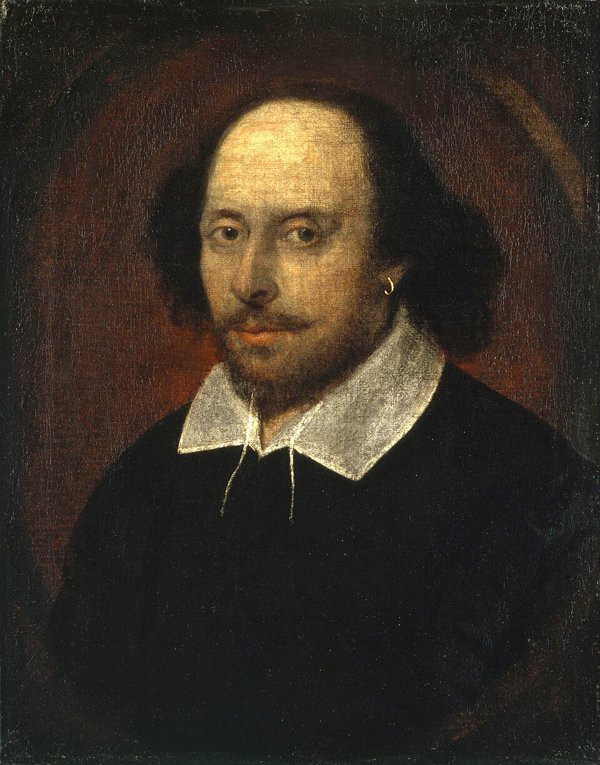
The provincial actor who, in London, wrote the tragedies by which the West still measures ambition, jealousy, revenge, and love. Read the profile of William Shakespeare
The Story and Its World
Romeo and Juliet is a tragedy in five acts by William Shakespeare, set in Verona, in northern Italy, with a single scene, the first of Act V, in Mantua. The exact date of composition is not known: it is estimated to have been written between 1591 and 1595. It was printed for the first time in 1597 and reprinted in 1599. The play revolves around two families of equal nobility, the Montagues and the Capulets, who keep an old enmity, and around Prince Escalus, who rules the city and threatens with death anyone who again disturbs the peace.
The story of two young people from rival families who die for love did not begin with Shakespeare. Masuccio Salernitano published in 1476 the tale of Mariotto and Ganozza, set in Siena. Luigi da Porto wrote in 1524 a version set in Verona, with the Montecchi and Capuleti families, published in 1531, and Matteo Bandello took it up again in 1554; the Frenchman Pierre Boaistuau translated Bandello in 1559. The English source that Shakespeare followed most closely was the narrative poem by Arthur Brooke, of 1562, and in 1567 William Painter included a prose version in his collection of novellas. Shakespeare kept the plot but changed the timeframe: where Brooke's poem covers about nine months, the play covers a few days, and he developed secondary characters, especially Mercutio, Paris, and the Nurse. Haste became one of the play's subjects, as the friar tells Romeo in scene 3 of Act II, when he warns that those who run fast stumble.
The play has five acts and 24 scenes: five in Act I, six in Act II, five in Act III, five in Act IV, and three in Act V. A Chorus, a character who speaks to the audience from outside the action, opens the play with a prologue of fourteen lines that announces in advance that the lovers will die and that their death will end the feud of their parents, and returns before Act II with another prologue of fourteen lines, which explains that Romeo's old desire for Rosaline has died and that he and Juliet now love each other. The two prologues make the spectator someone who knows the end and follows how it comes. Act I presents the feud, the ball, and the first meeting; Act II brings together the vows in the garden and the secret marriage; Act III is the turning point, with the deaths of Mercutio and Tybalt and Romeo's banishment; Act IV shows the friar's potion and the bride given up for dead; and Act V brings the letter that does not arrive, the deaths in the tomb, and the peace between the houses.
Three things are at stake. The first is the feud: it dictates every gesture of the lovers, who must hide their names, pass messages through the Nurse, and depend on a friar, and the duel between Mercutio and Tybalt shows that violence exacts its price from those who owe it nothing. The second is haste: the two love each other and marry in less than a day, and Capulet sets Juliet's marriage to Paris for Thursday without having spoken to his daughter. The third is the relation between destiny and choice: the Prologue calls the lovers born under a contrary star, Romeo senses a consequence hanging in the stars and, in Act V, defies the stars, but the final disaster depends on a letter that a friar, locked in a house suspected of plague, cannot deliver. The reconciliation between the families only comes with the death of their children, in the form of two golden statues promised by the parents.
Central Theme
Two young people from enemy houses love each other and marry in less than a day, and the play shows what their parents' feud does to this haste: each gesture of the lovers is dictated by a world that forces them to hide their names, pass messages through the Nurse, and depend on a friar. Love and hate appear from the Prologue on as the same matter. The peace between the families is made only over the bodies of the children.
The final disaster does not come from a single culprit: it comes from adults who act without seeing what is before them, and from a letter that does not arrive.