About the work
- Author
- William Shakespeare
- Original title
- The Tragedy of Othello, the Moor of Venice
- Publication
- Composed between 1601 and 1604; staged in 1604; printed in 1622
- Genre
- Tragedy in five acts
- Setting
- Venice and the island of Cyprus
- Period
- The war between Venice and the Turks, in the sixteenth century
- Narrator
- None: a play in verse and prose
- Protagonist
- Othello, a Moorish general in the service of Venice
About the author
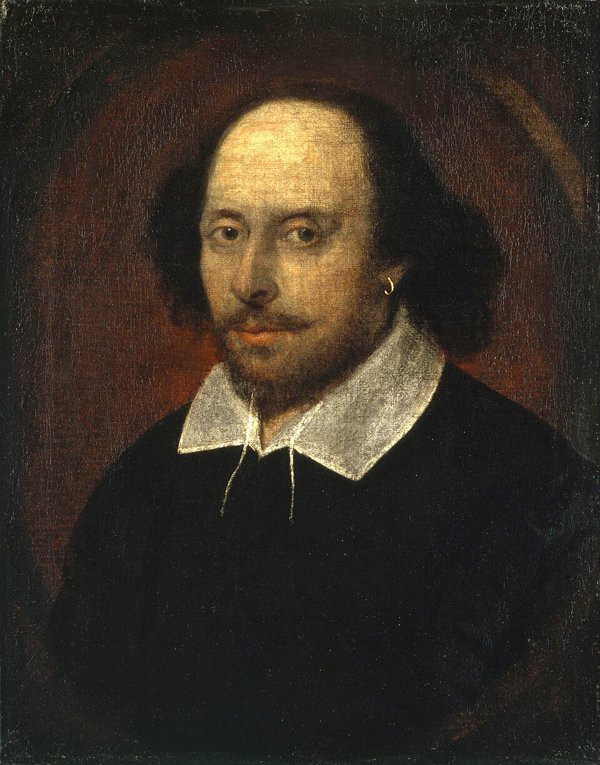
The provincial actor who, in London, wrote the tragedies by which the West still measures ambition, jealousy, revenge, and love. Read the profile of William Shakespeare
Introduction
- Othello is the tragedy in which evil has no supernatural aid: no ghost, no witch, the whole damage comes from a single man's word.
- The play was composed between 1601 and 1604, and two dates are argued for: one places it in 1602, the other in 1603-1604, the more traditional. The first recorded performance is of November 1, 1604, at the Banqueting House, in Whitehall, by the King's Men.
The Story and Its World
Othello is the tragedy of a Moorish general in the service of Venice who, within a few days, is convinced that his wife is unfaithful and kills her, and only afterward discovers that he was deceived. The one who deceives him is Iago, the ensign of his troop, who feels passed over when Othello gives the lieutenancy to Cassio. Rather than confront him, Iago works through words: he insinuates, repeats, lets silence do its work and, when necessary, lies outright, with a dream and a handkerchief.
The story comes from an Italian novella, the tale of the capitano moro by Giovanni Battista Giraldi Cinzio, published in 1565 in the collection Hecatommithi. Shakespeare kept the skeleton, a Moorish general, the Venetian wife, the resentful officer, the handkerchief and the murder of the innocent woman, and changed much around them. Roderigo, for example, has no model in the novella, and the magical dimension of the handkerchief, woven by a sibyl and given to Othello's mother by an Egyptian woman, is his invention: in the novella the object was only a lure to move the plot along. The play was composed between 1601 and 1604, and the first recorded performance is of November 1, 1604, at Whitehall.
The action begins in Venice and moves to Cyprus. Venice is the city of laws and of the Senate: there Desdemona's father accuses the general of witchcraft, and the Duke, who is the doge, head of the Republic, asks for proof. Cyprus is an island that Venice had controlled since 1489 and that the Ottoman Turks threatened; the actual war between the two powers, from 1570 to 1573, is the backdrop of the play. That is why the Senate cannot dispense with Othello, and why the action shifts to a military garrison, without the city's institutions, where a subordinate's resentment meets little to restrain it. The storm that sinks the Turkish fleet in Act II removes the external enemy from the stage and leaves the Venetians alone among themselves.
There are five acts and fifteen scenes, with no prologue. Act I, in Venice, shows Othello winning, through words, an accusation of witchcraft and setting out for Cyprus. In Acts II to V, in Cyprus, Iago first destroys Cassio's position, then Othello's trust: scene 3 of Act III, the longest in the play, is where he leads the general from doubt to certainty. Act IV shows what that certainty does to Othello and to Desdemona and decides the manner and place of the death. Act V brings the crime and the revelation: the truth comes out through Emilia and through letters found on a dead man, too late to save Desdemona.
The main characters are Othello, the general; Desdemona, daughter of the senator Brabantio, who marries him without her father's consent; Iago, the resentful ensign; Cassio, the lieutenant Othello promoted; Emilia, Iago's wife and Desdemona's attendant; and Roderigo, a Venetian who loves Desdemona and is exploited by Iago. Around them move the Duke, Montano, Bianca, Lodovico and Gratiano.
What is at stake is the distance between seeming and being. Iago tells Roderigo, in the first scene, that he is not what he is; Othello, who recognizes honesty by appearance, comes to trust whoever lies and to doubt whoever tells the truth. Around this the play works prejudice, which Venice supplies to the Moor before any act of his; reputation, which Cassio laments and Othello wants to keep intact; and jealousy, which here is less the cause than the result of a conviction manufactured with a few words and a handkerchief.
Central Theme
A general who conquered Venice through courage and eloquence is driven to kill the wife he chose, and the one who drives him is a resentful subordinate who deceives first with echo and pause, then with a recounted dream and outright lies. What makes the play endure is the mechanism, not the jealousy: Othello's trust in the appearance of honesty, the same trust that acquits him in the Senate, is the point where Iago presses, and the prejudice Venice already carries against the Moor prepares the ground before any insinuation. The truth only comes out in the last act, too late to save Desdemona.
Critical Reception
Critical texts on the play and its characters.
- The joker in the deck takes Iago out of the register of revenge and places him in that of the prankster, whose pleasure lies in showing others that they acted like puppets.
Jealousy Is Not the Key: Pushkin's Reading
Within Book VIII of The Brothers Karamazov, in narrating Mitya's jealousy of Grushenka, the narrator opens a parenthesis on the nature of true jealousy, quoting Pushkin:
Отелло не ревнив, он доверчив, Othello is not jealous, he is trusting.
The quotation reverses the common view of the play: if Othello acts out of betrayed trust, not out of a jealous temperament, this points to a failing of insecurity before a rigged proof, not to a vice of character.