About the work
- Author
- Leo Tolstoy
- Original title
- Смерть Ивана Ильича (Smert Ivana Ilyicha)
- Publication
- 1886
- Genre
- Novella
- Setting
- Provincial towns and the unnamed city of the Judicial Chamber, in Russia from the 1850s to the 1880s, in the courts and in a judge's home
- Narrator
- Third person, opening at the wake and returning to Ivan Ilyich's life up to his death
- Structure
- Twelve chapters
- Protagonists
- Ivan Ilyich and Gerasim
About the author
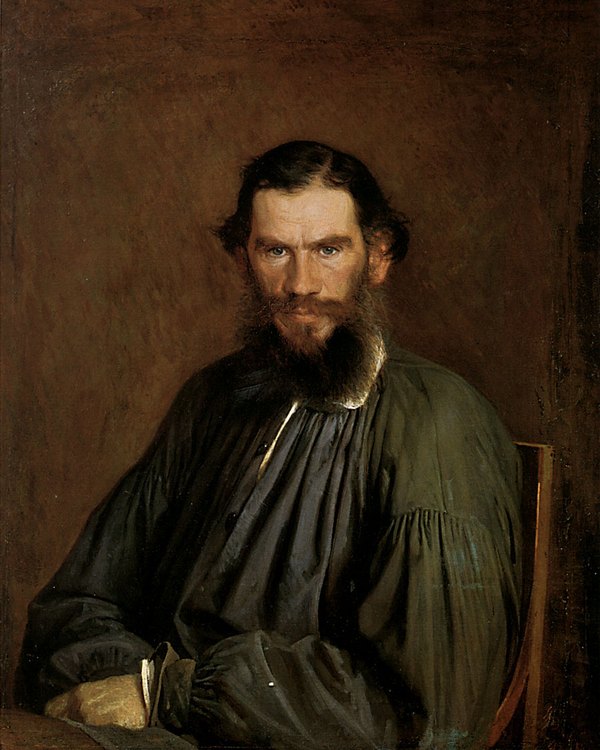
Count and landowner, he wrote the two great novels of imperial Russia, broke with the Orthodox Church and with fiction itself, and spent the last decades of his life trying to live a Christianity without the Church he preached. Read the profile of Leo Tolstoy
Central Theme
Ivan Ilyich Golovin, a member of the Judicial Chamber, dies at forty-five after a few months of illness, and the book begins with the wake. His colleagues read the death notice thinking about the promotions the vacancy will open, one of them goes to the funeral mass and spends the evening at cards, and only then does the narrator go back to the beginning and tell the life of the dead man, which he calls the simplest, the most ordinary, and the most terrible. The book does not ask whether the man will die, because the reader has already seen the coffin: it asks what death reveals about the life that came before it.
The life recounted is that of a judge who did everything the people above him considered correct: he studied at the School of Jurisprudence, climbed the career ladder, married for agreeableness and decorum, and furnished the new house the way people who want to appear rich do. The illness begins, as he himself believes, with a banal fall while hanging curtains. Around him are his wife, Praskovya Fyodorovna; his daughter, Lisa, who is about to marry; his schoolboy son, Vasya; the colleagues Pyotr Ivanovich and Schwartz; the doctors who argue over kidney and appendix; and the footman Gerasim, the only one who does not lie about what is happening.
The Thread That Runs Through the Work
The novella does not ask whether Ivan Ilyich Golovin will die; it asks what the correct life has to do with death, and it answers slowly, in the order in which it narrates. The wake in the first chapter shows the living treating death with the same decorum with which the dead man treated life, and the narrator generalizes what they feel, without exception. The second chapter gives the verdict before the biography:
Прошедшая история жизни Ивана Ильича была самая простая и обыкновенная и самая ужасная, The past history of Ivan Ilyich's life was the simplest, most ordinary, and most terrible.
From the illness onward, the lie changes sides. The technique Ivan Ilyich used in court, setting aside what is alive and handling the case, is that of the doctor who argues over kidney and appendix in front of him, and the decorum to which he devoted his whole life is what turns the agony into an inconvenience to be worked around:
Главное мучение Ивана Ильича была ложь, — та, всеми почему-то признанная ложь, что он только болен, а не умирает, Ivan Ilyich's main torment was the lie, that lie accepted by everyone for some reason, that he was merely ill and not dying.
The only exception is Gerasim, who carries the chamber pot, holds his master's legs for whole nights, and says that everyone will die. The decisive question is born on the night he sends Gerasim away and weeps alone, and Ivan Ilyich pushes it away for three chapters with the same yardstick that is on trial:
«Может быть, я жил не так, как должно?» — приходило ему вдруг в голову. «Но как же не так, когда я делал все как следует?», Could it be that I have not lived as I should? it suddenly came into his head. But how could that be, when I did everything as I ought? he said to himself.
In the last chapter the defense becomes an obstacle: what holds him in the black sack is the certainty that his life was good, and he gets through only when he lets go of it and feels pity for his son and his wife.
Пролезть же ему мешает признанье того, что жизнь его была хорошая., What keeps him from getting through is the acknowledgment that his life was good.
Он искал своего прежнего привычного страха смерти и не находил его. Где она? Какая смерть? Страха никакого не было, потому что и смерти не было. Вместо смерти был свет., He looked for his former habitual fear of death and did not find it. Where is it? What death? There was no fear at all, because there was no death either. Instead of death there was light.
The fall down the stairs in ch. III can be read as an echo of the first fall in Genesis.
The three stages of the lie: Ivan Ilyich lies to others and to himself from ch. II to ch. III, suffers the lies of others from ch. IV to ch. VIII, and stops lying to himself in ch. XI and ch. XII. The pity of others, which he wanted to receive like a child in ch. VII, frees him only when he gives it.