About the work
- Author
- Mikhail Bulgakov
- Original title
- Мастер и Маргарита (Master i Margarita)
- Composition
- 1928 to 1940
- Publication
- 1966 and 1967, with cuts; complete edition afterwards
- Genre
- Satirical and fantastical novel
- Setting
- Moscow in the 1930s and Pontius Pilate's Yershalaim
- Narrator
- Third person, a narrator who speaks to the reader; the Master's novel comes inside the novel
- Protagonists
- The Master and Margarita
About the author
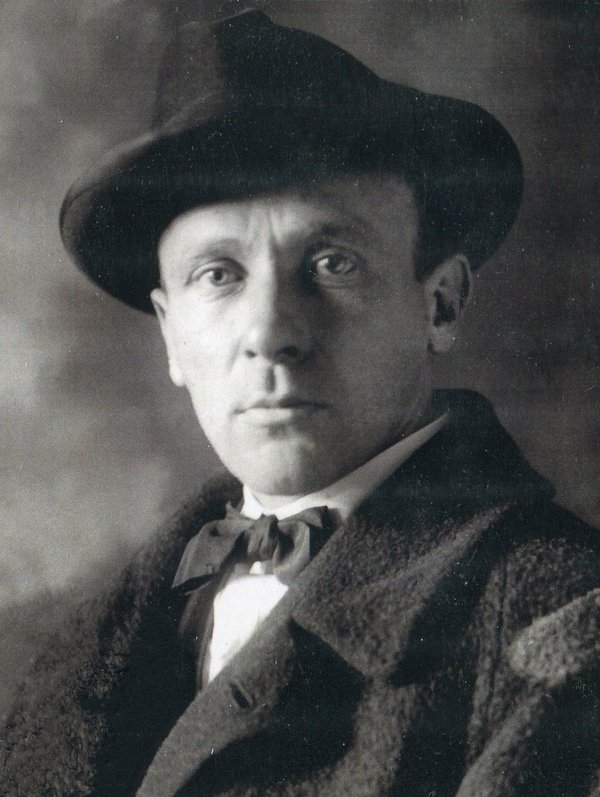
The doctor who became a writer under Stalin and who wrote, for twelve years and without being able to publish it, the novel in which the devil visits Moscow. Read the profile of Mikhail Bulgakov
The Three Planes, Which Is the Work's Architecture
The novel runs on three planes that touch only at the end, and reading any one of them in isolation is the most common way to lose the book. The first is 1930s Moscow, satirical, where the devil arrives as a foreign professor of black magic and the city cannot recognize him, because it has decided that he does not exist; what the novel makes of the city is gathered in Moscow. The second is Yershalaim, four chapters of a novel within the novel, serious in tone, which narrate the trial of Yeshua Ha-Notzri before Pontius Pilate. The third is the plane of the beyond, which opens with the ball and decides the fate of everyone.
The seam between them is a single one: chapter 1 ends with Woland beginning to recount Pilate's morning, and chapter 2 continues the story from where he stopped. Only in chapter 3, back in Moscow, does he claim to have been there in person. What in Moscow is literary debate over whether Jesus existed, in Yershalaim is an event.
I witnessed all of this personally. I was on the veranda with Pontius Pilate, in the garden, when he spoke with Caiaphas, I was also on the platform, only in secret, incognito
The two lines of the novel cross through different voices, and each time it is someone who tells, dreams, reads or writes who brings Yershalaim into Moscow. In chapter 2 the stranger from Patriarch's Ponds narrates Pilate's morning; in chapter 16, the execution at Golgotha reaches Ivan as a dream, in the clinic; chapter 24 ends with Margarita rereading, in the basement, the first line of chapter 25, and chapter 27 opens when she reaches the last words of chapter 26, so that chapters 25 and 26, with Pilate, Afranius and the death of Judas, are the pages she reads; in chapter 32, the Master, author of this novel, closes Pilate's story with a cry.
The two planes end in different places. After Pilate's pardon and the Master's refuge, in chapter 32, the Epilogue returns to Moscow: the city that opens the book by denying the supernatural closes it by explaining it with a gang of hypnotists and ventriloquists, and Ivan, now a professor, carries in his body what reason discarded, returning every year, on the spring full moon, to the bench at Patriarch's Ponds.
What the Book Claims, and Where It Is Debated
The moral thesis of the work is not in Woland's mouth, it is in Yeshua's, and it is uncomfortable in its simplicity: there are no wicked people, there are only unhappy people. The novel spends the whole book testing this sentence against informers, bureaucrats, denouncers and a procurator who orders killings.
Of them all, the most resigned was Yeshua.
The counterpoint comes from the devil himself, and it is what keeps the book from being pious: Woland corrupts no one in Moscow, he merely gives each person what they already wanted, and the city takes care of the rest. His remark about the housing problem is central to the novel because it exonerates the supernatural and indicts everyday life.
They are people like any others. They love money, but it has always been so... Humanity loves money, regardless of what it is made of: leather, paper, bronze or gold. Well, they are fickle... what can you do... mercy sometimes stirs in their hearts... they are ordinary people... on the whole they remind one of the people of long ago... only the housing problem has corrupted them...
The ending does not give the Master light, it gives refuge, and the difference between the two things is the point where criticism most disagrees. Whoever reads the book as redemption must explain why the reward is smaller than the one Yeshua attains; whoever reads it as defeat must explain why the text presents it as a gift, and not as punishment.
He did not earn the light, he earned peace
The link on the other side is the Faustian pact, and the novel declares it on the first page: the epigraph comes from Faust, and it is Mephistopheles who speaks it.
I am part of that power which always wills evil and always works good., epigraph, attributed in the book to Faust, by Goethe