About the work
- Author
- Aluísio Azevedo
- Publication
- Published as a book in 1890, in Rio de Janeiro
- Genre
- Naturalist novel
- Setting
- Botafogo, in Rio de Janeiro
- Period
- The Second Reign, in the years leading up to the abolition of slavery
- Narrator
- Third person, omniscient and distant, observing the tenement as an organism
- Protagonist
- João Romão, Portuguese shopkeeper, and the tenement itself
About the author
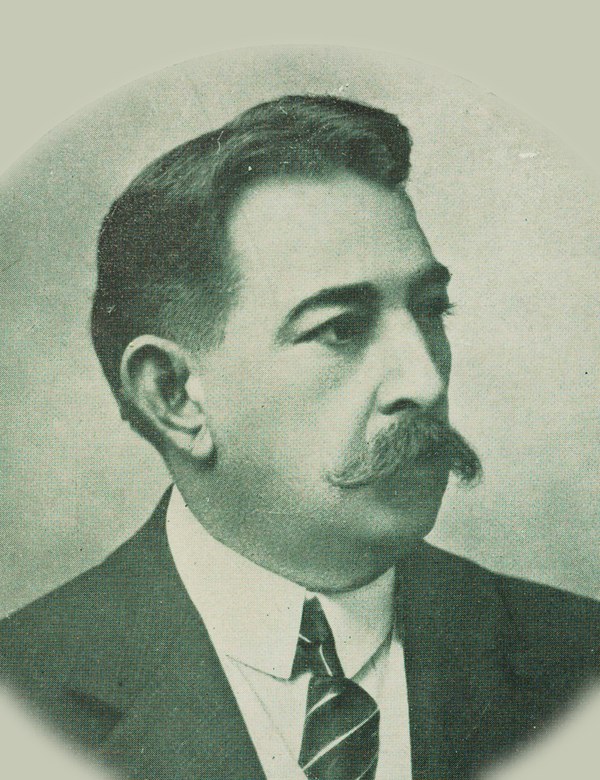
A novelist from Maranhão, a central name of Brazilian naturalism, author of O Mulato, Casa de Pensão, and The Slum. Read the profile of Aluísio Azevedo
Central Theme
A Portuguese shopkeeper in Botafogo piles up money by denying himself everything, takes for himself the savings of an enslaved street vendor, and raises, with stolen stone and other people's labor, a tenement of little houses and washtubs for laundresses. The book follows at once his rise and the life of the crowd that lives in the tenement: laundresses, quarrymen, capoeira practitioners, a girl waiting for puberty before she can marry, a Portuguese colonist whom the land transforms. What makes the book last is the way the narrator looks at these people, as an organism that wakes, ferments, arms itself, burns and renews itself, and the way the owner's money runs beneath everything, from the water in the tubs to the rent of the rooms. In the end the tenement has become an avenue, the shopkeeper is about to marry the daughter of the rich neighbor, and the woman who helped him rise is returned to her former master at the very moment a diploma of honorary membership from the abolitionists arrives for him.
The action takes place in Rio de Janeiro, in the neighborhood of Botafogo, from the 1870s on, when slavery was still legal and the abolitionist movement, the narrator says, was beginning to take shape around the Law of the Free Womb of 1871 (chapter II). Next to João Romão's store stands the townhouse of Miranda, a Portuguese merchant who despises his neighbor and envies him (chapter II), and between the two grows the tenement that gives the book its name.
The Thread That Runs Through the Work
Three threads run through the novel from beginning to end, and each can be followed through the chapters in which it appears.
The first is João Romão's rise. He lives in deprivation, appropriates the savings of Bertoleza and reads her a letter of freedom that he himself forged (chapter I); he raises the little houses with stolen stone and rents the houses and washtubs to the laundresses (chapter I); he refuses to pay the dowry he had promised Florinda (chapter X). The neighbor's title shows him what he lacks (chapter X), and he changes his clothes, his habits and his ambitions, arranging with Botelho the path to Zulmira (chapter XIII). The fire gives him the bottles of money belonging to Libório and an insured tenement (chapter XVIII), and a townhouse taller than Miranda's (chapter XIX, chapter XX). With the marriage settled, Bertoleza is what is left of the past (chapter XXI), and he returns her to her former master (chapter XXIII).
Aquilo já não era ambição, era uma moléstia nervosa, uma loucura, um desespero de acumular; de reduzir tudo a moeda, It was no longer ambition, it was a nervous malady, a madness, a desperate urge to accumulate; to reduce everything to coin
The second is the tenement as a living organism. It is born from the mud like larvae in dung (chapter I), wakes at five in the morning with its doors and windows opening like eyes (chapter III), forms an iron circle against the police (chapter X, chapter XI), splits into Carapicus and Cabeças-de-Gato (chapter XIII), arms itself for a battle that the fire interrupts (chapter XVII) and rebuilds itself, clean and whitewashed, as Avenida São Romão (chapter XX), until it becomes aristocratic and pushes poverty out to the rival tenement (chapter XXII).
E naquela terra encharcada e fumegante, naquela umidade quente e lodosa, começou a minhocar, a esfervilhar, a crescer, um mundo, uma coisa viva, uma geração, que parecia brotar espontânea, ali mesmo, daquele lameiro, e multiplicar-se como larvas no esterco, And in that soaked, steaming land, in that warm, muddy damp, a world began to wriggle, to seethe, to grow, a living thing, a generation that seemed to sprout spontaneously right there from that swamp and multiply like larvae in dung
The third is the transformation of Jerônimo. The quarryman arrives from Portugal serious and thrifty, with an exile's soul turned toward his village (chapter V), and it is the chorado of Rita Baiana that reveals to him the land that takes him in (chapter VII). Sick, he is nursed by her (chapter VIII) and little by little he trades the habits of a villager for those of the land (chapter IX), until he kills Firmo to be with the mulata (chapter XV) and leaves Piedade, who goes from a careful laundress to a drunk of the revelers' circle (chapter XX, chapter XXII).
pouco a pouco, se foram reformando todos os seus hábitos singelos de aldeão português: e Jerônimo abrasileirou-se, little by little, all his simple habits as a Portuguese villager were reformed: and Jerônimo became Brazilian