The Prince
The events in the order the book tells them.
Dedication and Principalities (I to XI)
- Dedication1
The Offer to Lorenzo
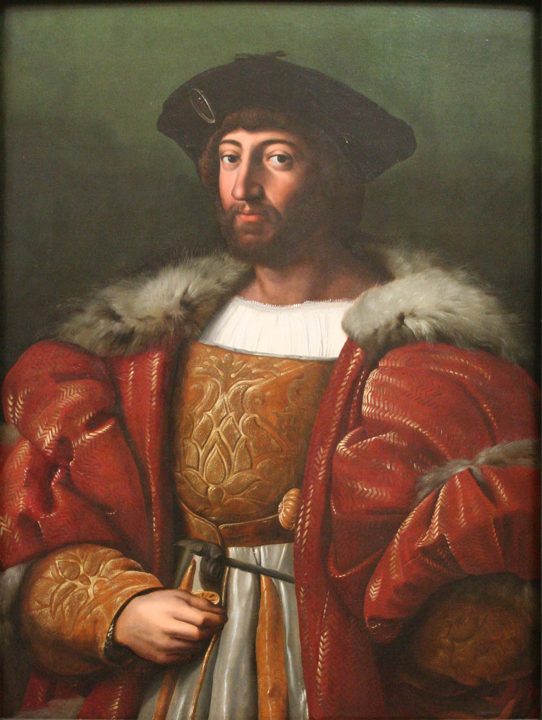
Machiavelli gives Lorenzo de' Medici, instead of horses and jewels, what he holds dearest: knowledge of great men, learned in the practice of government and in the reading of the ancients.
- Chapter I2
The Map of Principalities
In a single paragraph, Machiavelli divides all states into republics and principalities, and principalities into hereditary and new, which are acquired with others' arms or one's own, by fortune or by virtù.
- Chapter II3
The Hereditary Prince
In hereditary states it is enough not to disturb the order of one's ancestors. The duke of Ferrara resisted Venice and the pope merely by being long established in that dominion, and the natural prince is more loved.
- Chapter III4
Louis XII Loses Milan
The king of France takes Milan at once and at once loses it. Machiavelli shows what the conqueror must do in a foreign land, go and live there or send colonies, and the mistakes Louis made.
- Chapter IV5
The Kingdom of Darius
How did Alexander conquer Asia without rebellion? A kingdom governed by a prince and servants, like the Turk's, is hard to take and easy to hold; one with barons, like France's, is the opposite.
- Chapter V6
Cities That Were Free
To keep cities accustomed to their own laws there are three ways: ruin them, go and live in them, or leave them with their customs and a government of a few. Whoever does not destroy them should expect to be destroyed by them.
- Chapter VI7
Armed and Unarmed Prophets
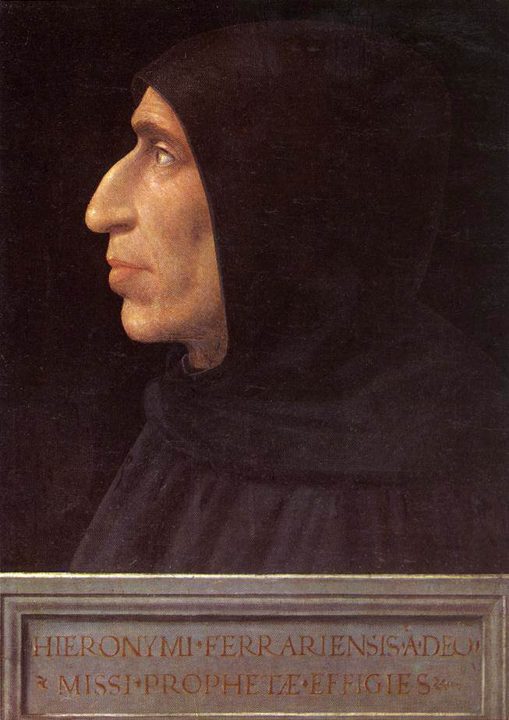
Moses, Cyrus, Romulus and Theseus received from fortune only the opportunity. Machiavelli concludes that armed prophets won and unarmed ones were ruined, like Friar Savonarola in Florence.
- Chapter VII8
Cesare Borgia in the Romagna
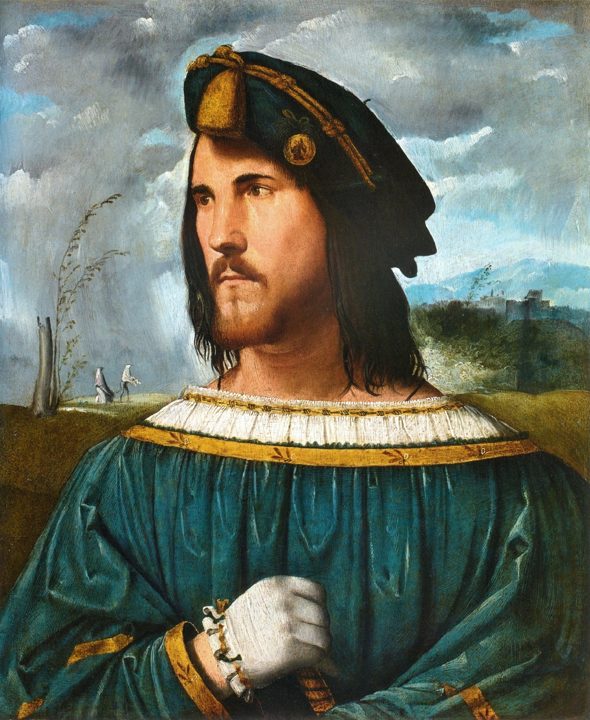
With the fortune of his father the pope, Cesare Borgia conquers the Romagna, eliminates the Orsini at Sinigaglia and has Ramiro d'Orco killed at Cesena. He loses everything when his father dies and he himself falls ill.
- Chapter VIII9
Agathocles and Oliverotto
Two examples of men who rise by crimes: the potter Agathocles, in Syracuse, and Oliverotto of Fermo, who kills his uncle at a banquet. This brings empire, not glory, and cruelties should be committed all at once.
- Chapter IX10
The Civil Principality
In every city the people do not wish to be oppressed and the great wish to oppress. Whoever rises with the people's favor is safer, and so the prince needs to have them as a friend in adversity.
- Chapter X11
German Cities and the Siege
The test of a principality is whether the prince can stand on his own. The German cities, with walls and provisions for a year, are hardly ever attacked, because no one likes a difficult enterprise.
- Chapter XI12
The State of the Church
Ecclesiastical principalities are held by the ancient institutions of Religion. Machiavelli tells how Alexander VI and Julius II enlarged the Church with arms and money, and hopes that Leo X will make her venerable.
Arms (XII to XIV)
- Chapter XII13
Mercenaries, the Ruin of Italy
Good laws depend on good arms. Mercenaries are disunited, unfaithful and moved only by pay, and by trusting in them Italy was taken by the king of France almost without a battle.
- Chapter XIII14
David's Armor
Auxiliary troops, lent by a powerful man, are dangerous: if you lose, you are undone; if you win, you are his prisoner. David refuses Saul's armor, and without arms of one's own no principality is secure.
- Chapter XIV15
War, the Prince's Art
The prince should think of nothing but war, and in peace more than in war: hunting to learn the terrain and studying the great captains. Francesco Sforza rose armed, and his sons fell unarmed.
The Prince's Conduct (XV to XXIII)
- Chapter XV16
The Effectual Truth of the Matter
Machiavelli prefers the effectual truth of the matter to the imagination of it: whoever exchanges what is done for what ought to be done learns his own ruin. The prince must learn to be able not to be good.
- Chapter XVI17
The Price of Being Liberal
Being held liberal obliges the prince to spend until he burdens the people and ends up hated. Those who did great things were held miserly, and thrift gives to all from whom it does not take.
- Chapter XVII18
Loved or Feared
When one must choose, it is safer to be feared than loved, provided the prince avoids hatred and respects his subjects' property and women. Cesare Borgia, held cruel, restored order to the Romagna.
- Chapter XVIII19
The Fox and the Lion
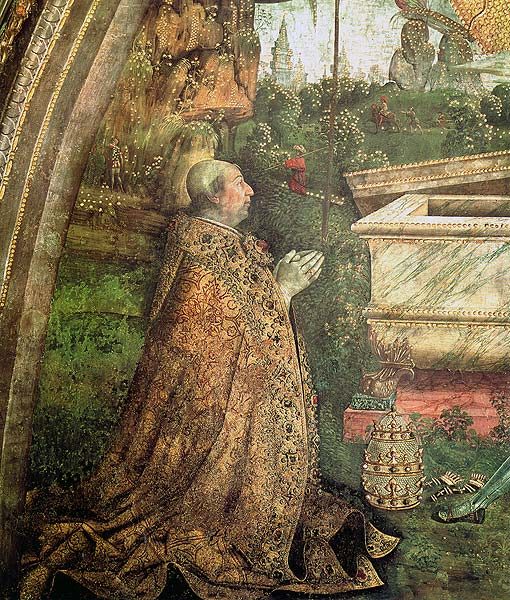
The prince must know how to use laws and force, be a fox to know the traps and a lion to frighten the wolves, and appear to have the good qualities. Alexander VI did nothing but deceive, and it always worked for him.
- Chapter XIX20
Contempt and Hatred
A prince makes himself hateful by seizing property and women; contemptible, by being inconstant. From the Roman emperors, from Marcus to Maximinus, Machiavelli concludes: the new prince must take from Severus what founds the state and from Marcus what preserves it.
- Chapter XX21
Fortresses and Subjects' Arms
New princes arm their subjects instead of disarming them, because disarming is giving offense. Factions and fortresses serve according to the times, and the best fortress is not to be hated by the people.
- Chapter XXI22
Ferdinand and Esteem
Nothing makes a prince so esteemed as great enterprises, like those of Ferdinand of Aragon, who linked Granada, the expulsion of the Marranos and the wars of Italy. One also esteems the man who declares himself a friend or an enemy, without neutrality.
- Chapter XXII23
The Choice of Ministers
The first guess about a prince is to see who surrounds him. Machiavelli distinguishes three kinds of brains, the one that understands by itself, the one that understands what is shown to it and the one that does not understand, and how to keep a minister faithful.
- Chapter XXIII24
The Flatterers
Flatterers are the plague of courts. The way out is to choose wise men, give only them the liberty to speak the truth, and only when the prince asks, and to decide alone, unlike the emperor Maximilian.
Italy and Fortune (XXIV to XXVI)
- Chapter XXIV25
Why Italy Lost
The Italian princes who lost their states should not blame fortune but their own sloth: they did not think of the storm during the calm and expected the peoples to call them back.
- Chapter XXV26
The River of Fortune
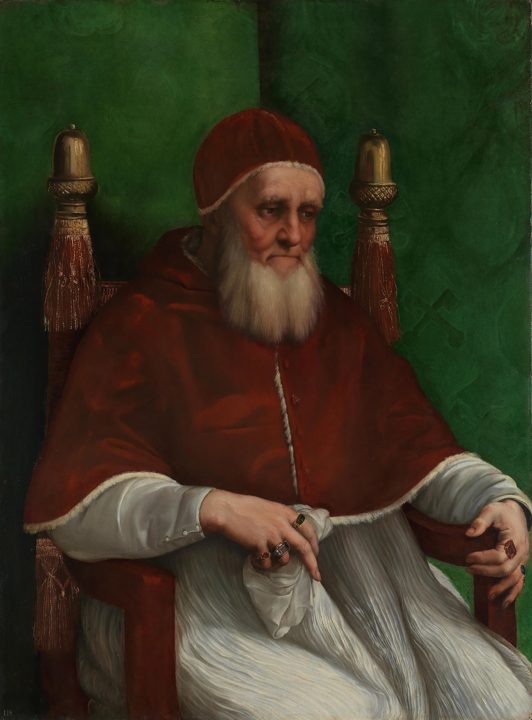
Fortune governs half of our actions and leaves the other half to us: she is a river that can be contained with dikes. Julius II wins by always acting with impetuosity, and Machiavelli prefers the impetuous to the cautious.
- Chapter XXVI27
The Final Call
Machiavelli asks the House of Medici to free Italy from the barbarians: there has never been a more fitting time, the war is just because it is necessary and God does not wish to do everything. The book closes with verses of Petrarch.